
Whiteward Overview
Whiteward is a striking mid-to-upper district in Hollow Knight: Silksong characterized by brilliant white architecture, exposed platform spans, and dramatic high-contrast visual design. This elevated citadel area represents a significant step up in environmental challenge and combat complexity, featuring long sightlines perfect for ranged combat encounters and precision platforming sequences that test advanced movement skills.
The region serves as a crucial connection hub linking the High Halls to other citadel interiors and tower networks. Whiteward's distinctive bright aesthetic and strategic positioning make it both a beautiful landmark and a challenging navigation puzzle that rewards careful planning and methodical exploration.
Key Features
- High-Contrast Architecture: Brilliant white platforms and structures creating unique visual challenges
- Exposed Platform Networks: Long spans requiring precise movement and threat assessment
- Strategic Hub Location: Critical connections to High Halls and citadel interior regions
- Ranged Combat Focus: Environmental design favoring long-distance engagement strategies
- Advanced Platforming: Challenging traversal sequences requiring mid-to-late game movement skills
- Vertical Integration: Multi-level design connecting lower districts to elevated tower systems
Environmental Design & Visual Challenges
Architectural Features
- Bright Platform Systems: Gleaming white surfaces that can affect depth perception and contrast reading
- Exposed Span Networks: Long, open bridges and walkways with minimal cover or safety barriers
- Geometric Precision: Clean, angular architecture requiring exact positioning for optimal traversal
- Elevation Integration: Seamless connections between different height levels and building systems
- Lighting Contrasts: Dramatic shadow and highlight patterns that can obscure enemy positions
Navigation Considerations
- Sightline Management: Open areas provide excellent visibility but also expose players to ranged attacks
- Distance Assessment: Bright backgrounds can make judging jump distances more challenging
- Cover Utilization: Limited environmental protection requires strategic positioning during combat
- Movement Precision: Sleek platforms offer less margin for error in landing and positioning
Get the Whiteward Map (Shakra Location Guide)
Finding Shakra in the Citadel District
- Access Route: Typically reached via citadel routes and mid-upper hall connections
- Location Identification: Look for Shakra in a side corridor off a main bright platform span
- Audio Navigation: Her distinctive humming echoes uniquely in the high-contrast architecture
- Visual Landmarks: Shakra's setup contrasts distinctively against the bright white surfaces
- Purchase Timing: Buy the map immediately as Whiteward's layout can be disorienting without guidance
Essential Mapping Tools
- Whiteward Map: Reveals the network of platform spans and building connections (essential for navigation)
- Quill: Critical for mapping the numerous branching paths and elevation changes
- Compass: Invaluable for maintaining orientation in visually similar bright environments
- Navigation Value: The high-contrast environment makes comprehensive mapping tools particularly important
Strategic Mapping Importance
Whiteward's bright, geometrically similar architecture can quickly disorient players without proper mapping support. The combination of exposed spans, multiple elevation levels, and uniform coloration makes the Quill/Compass combination essential rather than optional.
Combat Strategy & Ranged Engagement
Ranged Combat Advantages
- Clear Sightlines: Long, unobstructed views enable effective ranged combat strategies
- Positioning Options: Multiple elevation levels provide tactical positioning advantages
- Enemy Visibility: High-contrast environment makes enemy detection easier at distance
- Engagement Control: Open spaces allow players to control engagement ranges and timing
Defensive Considerations
- Limited Cover: Exposed spans provide minimal protection from ranged enemy attacks
- Retreat Planning: Always identify escape routes before engaging enemies on open platforms
- Height Advantage: Use elevation differences to gain tactical superiority in combat encounters
- Movement Space: Utilize the open areas for evasive maneuvering during difficult fights
Environmental Combat Integration
- Platform Edges: Use precise positioning near platform edges for tactical advantages
- Light/Shadow Zones: Leverage brightness contrasts for concealment and ambush opportunities
- Vertical Engagement: Incorporate elevation changes into combat positioning strategies
- Group Management: Open spaces excel for crowd control during multiple enemy encounters
Area Connections & Hub Functionality
Primary Connection Points
- High Halls Access: Major pathway connecting to the High Halls region
- Citadel Interior Routes: Multiple entrances to interior building networks and tower systems
- Bell Travel Integration: Fast travel stations positioned for efficient hub access
- Vertical Connections: Upper and lower level access points for comprehensive area coverage
Strategic Route Planning
- Hub Positioning: Whiteward serves as an efficient staging area for exploring connected regions
- Progression Gates: Some connections require specific movement abilities or key items
- Return Efficiency: Bell network positioning enables quick returns for resource gathering or upgrades
- Exploration Optimization: Use Whiteward as a base for systematic exploration of connected areas
Platforming Challenges & Movement Requirements
Exposed Span Navigation
- Precision Jumping: Long spans require accurate distance judgment and landing precision
- Movement Conservation: Avoid over-dashing on sleek surfaces that can cause overshooting
- Environmental Reading: Learn to distinguish safe landing zones from decorative or unstable surfaces
- Timing Mastery: Some platform sequences require specific timing windows for optimal traversal
Advanced Movement Integration
- Mid-to-Late Game Tools: Many optimal routes benefit from advanced movement abilities
- Wall-Jump Applications: Vertical surfaces provide opportunities for enhanced movement options
- Dash Timing: Precise dash usage enables access to otherwise unreachable platform networks
- Combo Movement: Some areas require combining multiple movement techniques for access
Safety and Risk Management
- Edge Awareness: Bright platforms can make edge detection challenging - maintain center positioning when possible
- Fall Recovery: Plan for fall scenarios and identify recovery routes before attempting difficult jumps
- Progressive Difficulty: Start with easier platform sequences before attempting advanced challenges
- Backup Planning: Always have retreat options available during challenging traversal attempts
Bench Locations & Staging Strategy
Essential Bench Network
-
Citadel Entry Bench
- Location: Near the main access points from connecting areas
- Purpose: Initial staging area for Whiteward exploration
- Features: Often positioned with good visibility of main platform networks
-
Central Hub Bench
- Location: Strategically placed within the main platform network system
- Purpose: Critical checkpoint for deep exploration and connection area access
- Access: May require some platforming skill to reach securely
-
High Halls Connection Bench
- Location: Positioned near the pathway to High Halls for convenient transition
- Purpose: Optimal staging for advanced area exploration
- Value: Reduces travel time when moving between major regions
Bench Usage Strategy
- Staging Approach: Use benches as staging areas for lateral exploration rather than linear progression
- Connection Optimization: Position bench usage to minimize travel time between connected regions
- Risk Management: Secure bench access before attempting challenging platforming or combat sections
- Resource Efficiency: Plan bench usage to combine rest stops with exploration and resource collection goals
Hidden Areas & Secret Content
Exploration Opportunities
- Architectural Secrets: The geometric design hides passages and rooms within seemingly solid structures
- Elevation Mysteries: Upper and lower areas contain hidden content accessible with proper movement skills
- Platform Extensions: Some exposed spans connect to hidden areas not immediately visible
- Citadel Integration: Secret passages connecting to other citadel districts and tower networks
Discovery Techniques
- Visual Scanning: The high-contrast environment can hide passages in shadow areas
- Audio Cues: Listen for environmental sounds that indicate hidden areas or interactive elements
- Movement Exploration: Use advanced movement abilities to test seemingly inaccessible areas
- Systematic Investigation: Methodically explore all accessible surfaces and elevation levels
Enemy Types & Combat Encounters
Whiteward-Specific Threats
- Citadel Guards: Elite enemies positioned to control key platform spans and connection points
- Ranged Sentries: Long-distance attackers taking advantage of clear sightlines
- Aerial Patrols: Flying enemies that use the open spaces for attack patterns
- Platform Defenders: Enemies positioned to deny access to key traversal points
Combat Environment Utilization
- Sightline Control: Use the clear visibility to identify and prioritize threats before engagement
- Elevation Tactics: Leverage height differences for combat advantages
- Space Management: Utilize the open areas for movement-based combat strategies
- Positioning Priority: Secure advantageous positions before initiating difficult encounters
Items & Collectibles Guide
Area-Specific Rewards
- Citadel Treasures: Valuable items reflecting the area's elevated status and strategic importance
- Movement Enhancements: Upgrade materials that complement the area's platforming challenges
- Currency Deposits: Rosary concentrations for funding continued exploration and upgrades
- Architectural Artifacts: Lore items revealing the history and purpose of the citadel district
Collection Strategy
- Elevation Exploration: Many valuable items are hidden in upper or lower areas requiring movement skills
- Platform Investigation: Thoroughly explore all exposed spans and connection points
- Secret Integration: Combine secret area exploration with systematic item collection
- Return Planning: Mark challenging collection points for revisiting with enhanced abilities
Frequently Asked Questions
Access & Navigation
Q: How do I reach Whiteward? A: Whiteward is typically accessed through citadel routes and mid-upper hall connections. The exact path depends on your progression route through the connected regions.
Q: Why do I keep falling off the bright platforms? A: The high-contrast environment can make edge detection challenging. Stay toward platform centers, use shorter hops instead of long dashes, and take time to assess jump distances carefully.
Q: Where exactly is Shakra's shop in Whiteward? A: Look for her in a side corridor off one of the main bright platform spans. Listen for her distinctive humming sound, which echoes uniquely in this architectural environment.
Combat & Strategy
Q: How should I handle the ranged enemies on exposed platforms? A: Use the clear sightlines to your advantage - peek edges before committing to open spans, clear perched threats from safe positions, and always have retreat routes planned.
Q: Are there any special movement techniques needed for Whiteward? A: While not strictly required, mid-to-late game movement tools make traversal significantly safer and open up additional routes. Basic platforming skills are sufficient for core progression.
Q: What's the best strategy for the long platform spans? A: Clear ranged threats first, use short controlled jumps instead of long dashes, maintain center positioning on platforms, and identify landing zones before committing to jumps.
Progression & Connections
Q: How important is Whiteward for overall progression? A: Whiteward serves as a crucial hub connecting High Halls to other citadel areas. While not always mandatory, it provides efficient routes and valuable resources.
Q: Can I skip Whiteward and return later? A: In most cases, yes. However, the area provides valuable connections and resources that can benefit exploration efficiency in connected regions.
Q: What areas connect to Whiteward? A: Whiteward primarily connects to High Halls and various citadel interior regions. The exact connections depend on your progression path and unlocked abilities.
Advanced Exploration Strategies
Systematic Approach
- Bench-to-Bench Progression: Advance between secure checkpoints, exploring lateral areas before moving forward
- Connection Mapping: Identify and document all connections to other areas for efficient return visits
- Elevation Coverage: Systematically explore all accessible height levels before moving to new regions
- Secret Integration: Combine main progression with thorough secret area investigation
Efficiency Optimization
- Route Planning: Use the bell network and hub positioning to minimize backtracking between areas
- Resource Coordination: Combine exploration goals with currency collection and upgrade acquisition
- Movement Synergy: Plan exploration around available movement abilities, marking restricted areas for future visits
- Connection Utilization: Use Whiteward's hub status to efficiently access multiple connected regions
Related Guides & Resources
- High Halls Area Guide - Connected region information
- Early Game Map Locations - Navigation and vendor strategies
- 100% Completion Route - Comprehensive exploration planning
- Rosaries Currency Guide - Resource management for area progression
- Advanced Movement Techniques - Movement skill optimization
- Citadel District Overview - Region context and connections
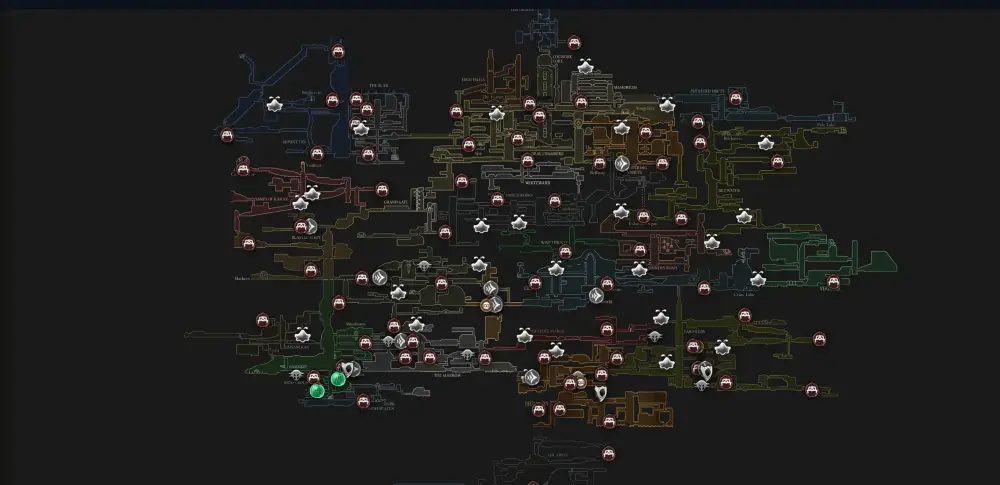
Open Interactive Map (All Areas)
Opens the full interactive Silksong map in a new tab.